Hello!
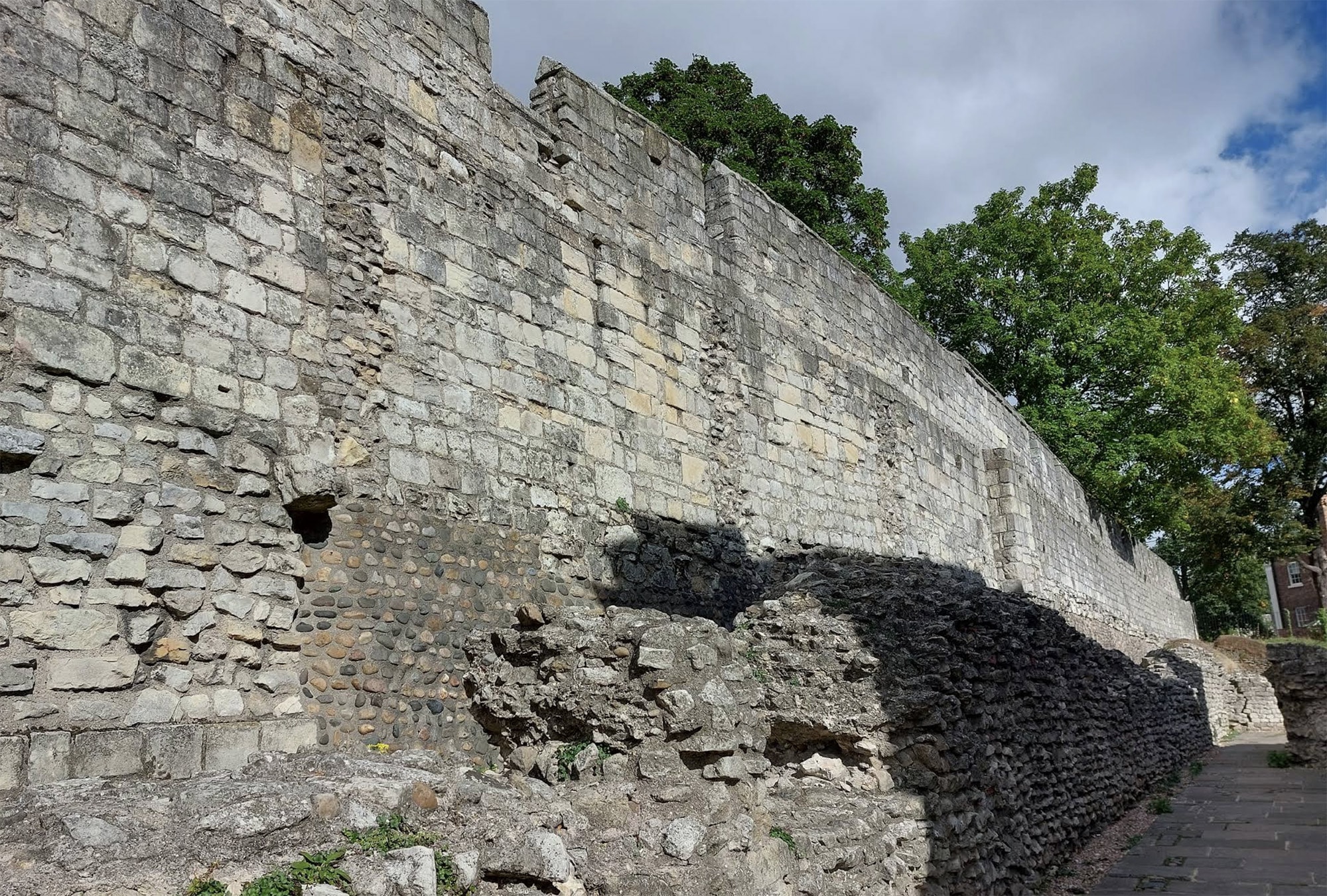
Roman burials (inside and outside Multangular Tower)
About Roman burials (inside and outside Multangular Tower)
Numerous Roman cemeteries and single burials have been found across York, largely unearthed during the 19th century.
Under Roman law, bodies were forbidden to be buried within the boundaries of settlements, mainly for reasons of hygiene.
Cemeteries flanked the main approach roads into York, leading to the legionary fortress and civilian town or Colonia.
In the early Roman period, the bodies of the deceased were cremated and their ashes were put into containers and placed in the ground.
Around the turn of the third century, the dead started to be buried intact, in bath-shaped graves.
The discovery of irons nails in some burials provides evidence that the deceased were sometimes placed in wooden coffins.
Stone and lead coffins were also used, which were expensive, normally restricted to the wealthier members of Eboracum.
Examples of stone sarcophagi from the Roman period can be found in the Museum Gardens, discovered during the 19th century when York began to expand.
Many were uncovered outside the ancient city centre, especially during construction of houses along The Mount and Tadcaster Road and when York’s current and former railway station(s) were built.
 Culture
  Family Friendly
 Approx. 1hr+
 Food & Drink