Hello!

About Roman column
York’s history begins with the Romans in AD 71 when 5,000 men of the Ninth Legion left Lincoln to establish a military base to control the region against the local warlike tribes.
A site was selected on a dry triangle of land, where both the River Foss and River Ouse meet together.
The area chosen provided a good defensive position, easy communications by land and water, along with trade links to the rest of the Roman Empire.
Named Eboracum by the Romans, the new settlement provided a permanent base for the provincial garrison in York for the next 339 years.
Now mostly buried under York Minster, the plan of the fortress resembled a playing card and was defended by a ditch and earthen rampart, topped with timber palisades.
On the inside, the fortress was divided by a rectangular grid of streets, occupied by a variety of buildings in-between, including officers’ quarters, a hospital and stables.
Located at the heart of the fortress was the Principia, a huge structure where the administration of the legion and religious ceremonies took place.
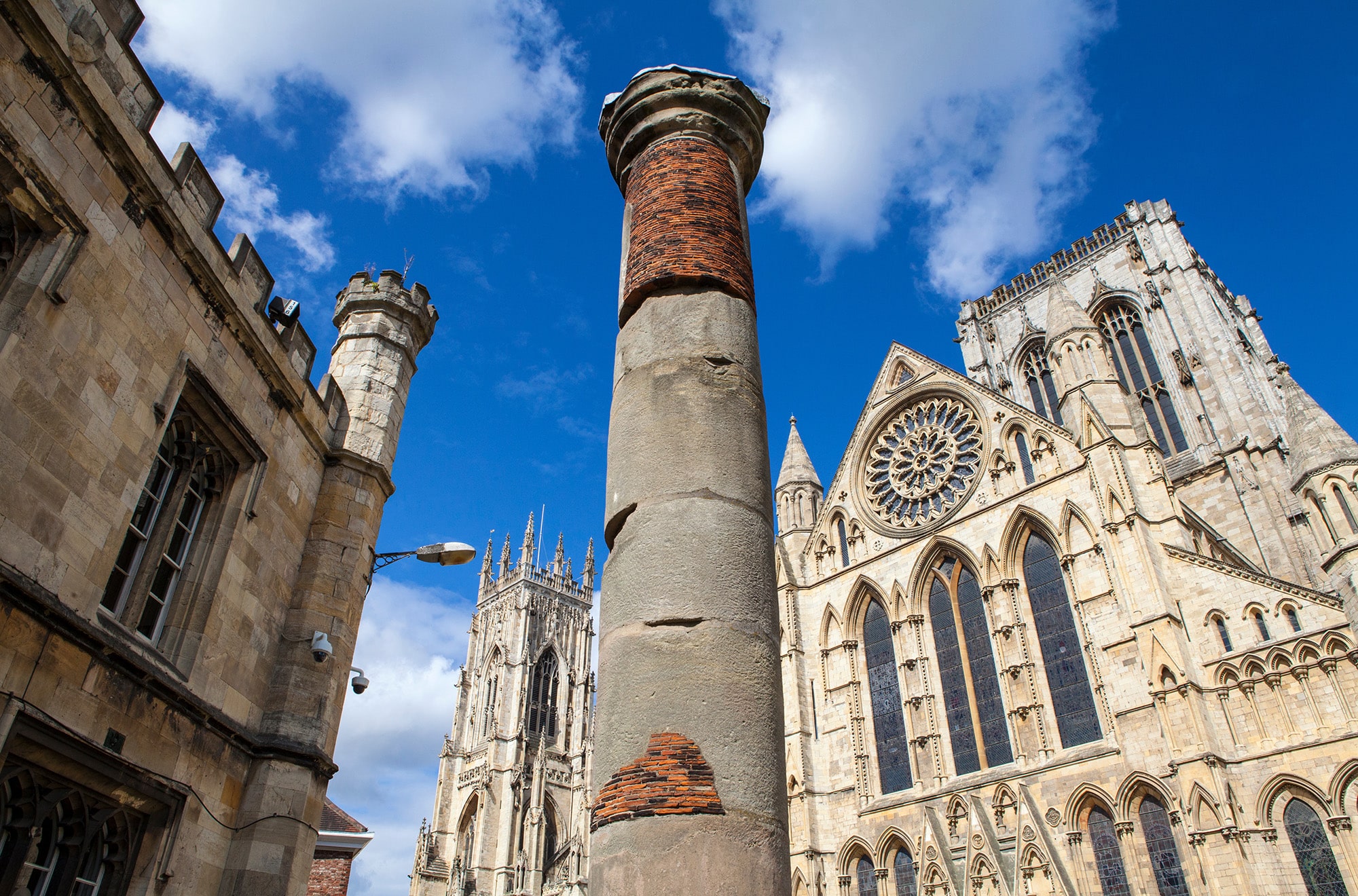
A huge column from the headquarters building was found broken and lying on its side in 1969, during archaeological excavations carried out underneath York Minster’s tower.
The cylindrical column, which stands about 9.5m (roughly 31ft) in height, was one of around 16 used to support the roof of the basilica.
Made from grit stone, the huge column was reconstructed and erected outside York Minster in 1971 having probably collapsed in the ninth century.
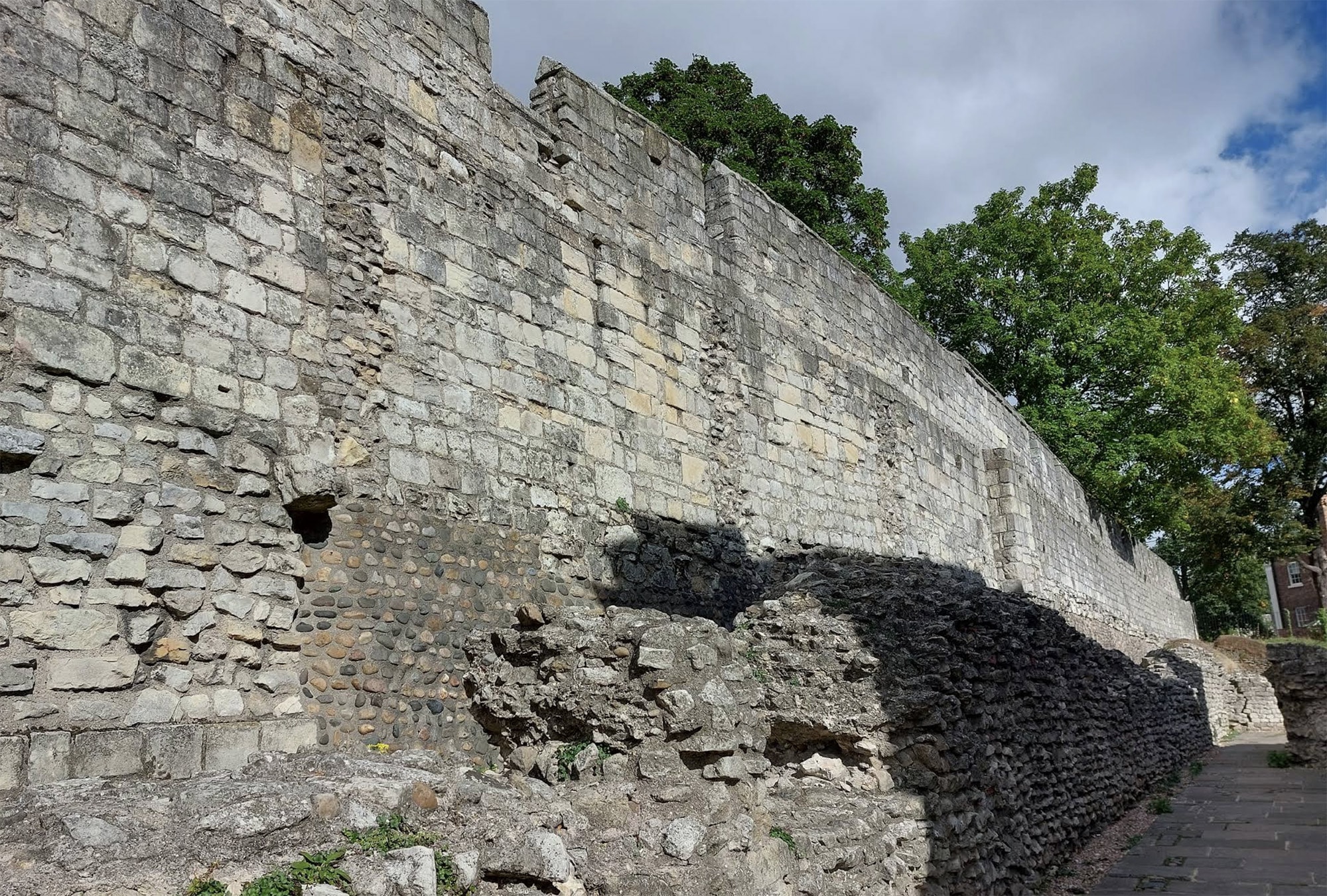
The fortress was largely rebuilt in stone about AD 200, but the defences were further strengthened around AD 300, under the direction of Emperor Constantine the Great.
By the fourth century, York’s fortunes had begun to decline and Eboracum was abandoned after AD 400, a time when the Roman Empire was on the point of collapse.
Next Stop
 Family Friendly
  History & Heritage